
What the Roots Were Holding
On flow state burnout and learning to stop safely.

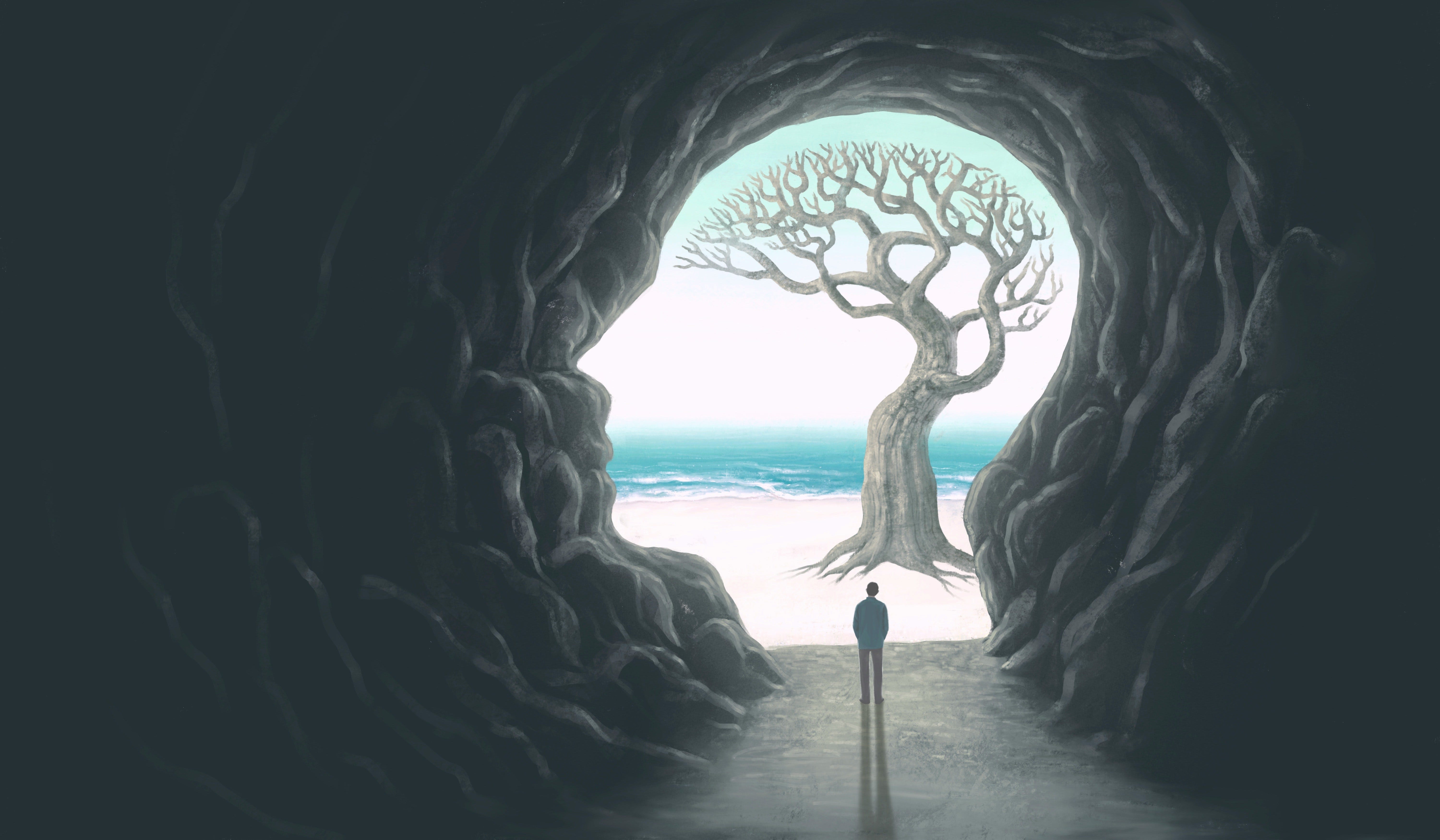
Photo by Getty Images for Unsplash+
Jen Beford, The Divergent Talent Alchemist, suggested the topic of this essay, and we have a collaboration in the works. Keep an eye out for it.
For the neurocomplex human, who is a pattern mapper, a systems thinker, a gestalt processor, or some combination of these, there is a place some of us visit. The place where work that doesn't feel like work never quite stops. Where connections keep firing, next steps keep appearing, and "done" is a moving target that somehow always moves forward. Where what looks like perfectionism from the outside is often something else entirely: coherence seeking. The drive to reach a natural stopping point where things hold together, where the shape of the work makes internal sense. The natural output of a brain that maps branches and threads and follows them all to their ends.
Close your eyes for a moment. (After you finish reading this paragraph, of course.) Find the place where the working style lives, the pattern recognition, the coherence seeking, and the completionist tendencies. Feel how alive it is there. That aliveness is real. It’s also the thing that can quietly run us into the ground.
Burrowed into the mind, made a home there. Energized. Making things happen, exciting things. Maybe there’s music on, or a familiar show playing in the background. Maybe it’s the birds outside an open window, or complete silence. The environment is exactly right: the lighting, the texture of clothing, the chair, the favorite things all around. Nothing is itching, flickering, or off. Every variable dialed in.
And patterns are firing. Not scattered. Aligned. Smooth.
This is the place some of us have spent years learning to reach. When we're there, the last thing we want to do is leave. So we don't. Not before the cost starts.
Here's the thing about the kind of burnout that comes from this kind of flow state: it feels good until it doesn't, and by the time it's noticeable, pushing through already feels like what's wanted and needed.
For many of us, the resources that support interoception get reallocated during deep flow. The ability to sense what’s happening inside the body gets redirected. Some of us surface to discover the bladder is full, that we haven't eaten all day, or that the headache now present has been building for hours. For me, it starts with eye strain, a pressure spreading across my forehead. My body flags what my mind refused to register, noticeable only after I’ve already stopped.
Most of the time, when the early clues appear, I keep going anyway.
There’s another layer to this. The physical symptoms that accumulate from flow state burnout, the building fatigue, and the depletion that compounds over days are genuinely harder to trace than symptoms with an obvious cause. When something unpleasant produces physical fallout, the connection is clear. When something that felt generative and alive produces the same fallout, the logical brain struggles to make the connection. Flow state doesn’t feel like something with a cost, so the body may send clear signals even as the mind still looks for a different explanation.
Here’s what’s actually happening beneath the flow: my mind has taken root in the work. Not metaphorically. It genuinely feels that way, as if something alive is extending into the topics I’m moving through, drawing on them, and staying connected. Pulling away from that doesn’t feel like closing a tab. It feels like tearing something.
The risk isn’t just tiredness. It’s losing the thread entirely. Flow states require specific conditions, and those conditions aren’t always reproducible on demand. My body might not be in the same state tomorrow. The calendar might be full. The environment might be wrong. If I stop without properly setting the work down, I don’t just pause. I feel its absence immediately, as if something were cut off mid-growth. And if I haven't set it down cleanly, my brain doesn't stop either. It keeps going while I'm trying to sleep, running the threads, following the roots, and looking for the coherence it didn't get to reach.
So I reenter. Not because I want to. Because I have to. Because the cost of losing the thread outweighs the cost of pushing through.
That compulsory reentry is where the burnout lives, not in the work itself but in the inability to stop when it’s time to rest.
The shift that changed things for me wasn’t about discipline or willpower. It wasn’t about caring less or wanting less. It was about understanding that completion doesn’t have to mark the end of the work. It can mark the end of this phase, this thread, or this session. A place where enough coherence exists to set it down, where the shape of what’s been built holds together enough to be picked up again.
But that only works if I’ve done something first: gathered enough context in advance to know where the branch points are before I’m inside them.
When I can see the shape of the work before I begin, I can build in stopping points. Not arbitrary timers, but natural branch points, places where the coherence of one phase completes before the next begins. At this point, I check in with myself and note where the other threads are leading. I pause, place a pin, and write down where the roots were heading next.
Externalizing it, getting it out of my body and onto a page, voice notes, or a screen before I stop, means I can set it down without losing what the roots were holding on to.
Here's what I've learned about leaving without tearing anything up.
Gather context before beginning. When possible, spend a few minutes mapping the work's shape before diving in. What are the natural branch points? Where does one phase end and another begin? The full picture won't always be visible, and that's okay. Even a partial map is better than none.
Build stopping points in advance, not in the moment. Alarms, reminders, focus windows. Not because of any lack of self-trust, but because the future self will be deep in the roots and won't want to surface. The decision to stop is easier when the past self has already made it.
When the map runs out, externalize. When the work reveals itself in motion, and the next branch point isn’t visible, write down where things are before stopping. Where were the roots heading? What were the open threads? What would be needed to pick this up tomorrow? Get it out of the body and onto the page. For many of us, AI has become a genuine accommodation here. The entire shape of the work can be held in a conversation, the threads named, the roots mapped, the context preserved, so that stepping away doesn’t mean losing everything.
Notice the body first. It will often signal before the mind does. Eye strain, pressure spreading across the forehead, or tightness somewhere. Those signals are specific and learnable. They're not interruptions. They're information.
Redefine done. This phase is complete. This thread is pinned. This session is finished. Done doesn’t have to mean everything. It just has to mean something real.
This is slow work. Retraining a brain that has spent years equating stopping with losing is not a quick fix. Some days, compulsory reentry wins. Other days, life intervenes before there’s been a chance to set anything down, and the thread disappears.
Flow state and the conditions that support it are inherently unpredictable. Working memory can be fragile, and what felt permanently etched an hour ago can be genuinely gone by morning. The best groundwork can be laid, yet the state or the memory may be gone, or the body may no longer be able to hold it.
What I’ve found is that the more I practice setting things down with care, the more I trust they’ll still be there when I return. Sometimes the roots hold. Sometimes they don’t. The practice is to give them the best possible chance.
And that’s enough.
Great piece. i struggle with this too. what matters is whether our goals focus our attention and draw us into achievable, enjoyable activities.