
That’s Just Not How the World Works
The quiet conditioning that teaches capable people to burn out

I’ve spent most of my life being told some version of: “That’s just not how the world works.”
Most of the time, no one actually said it.
It was baked into systems that rewarded speed over understanding. Into classrooms that treated processing time as a liability. Into environments where ambiguity was framed as maturity and clarity was treated like a crutch. Into relationships in which asking for accommodation slowly taught me who was allowed to take up space and who was expected to adapt quietly.
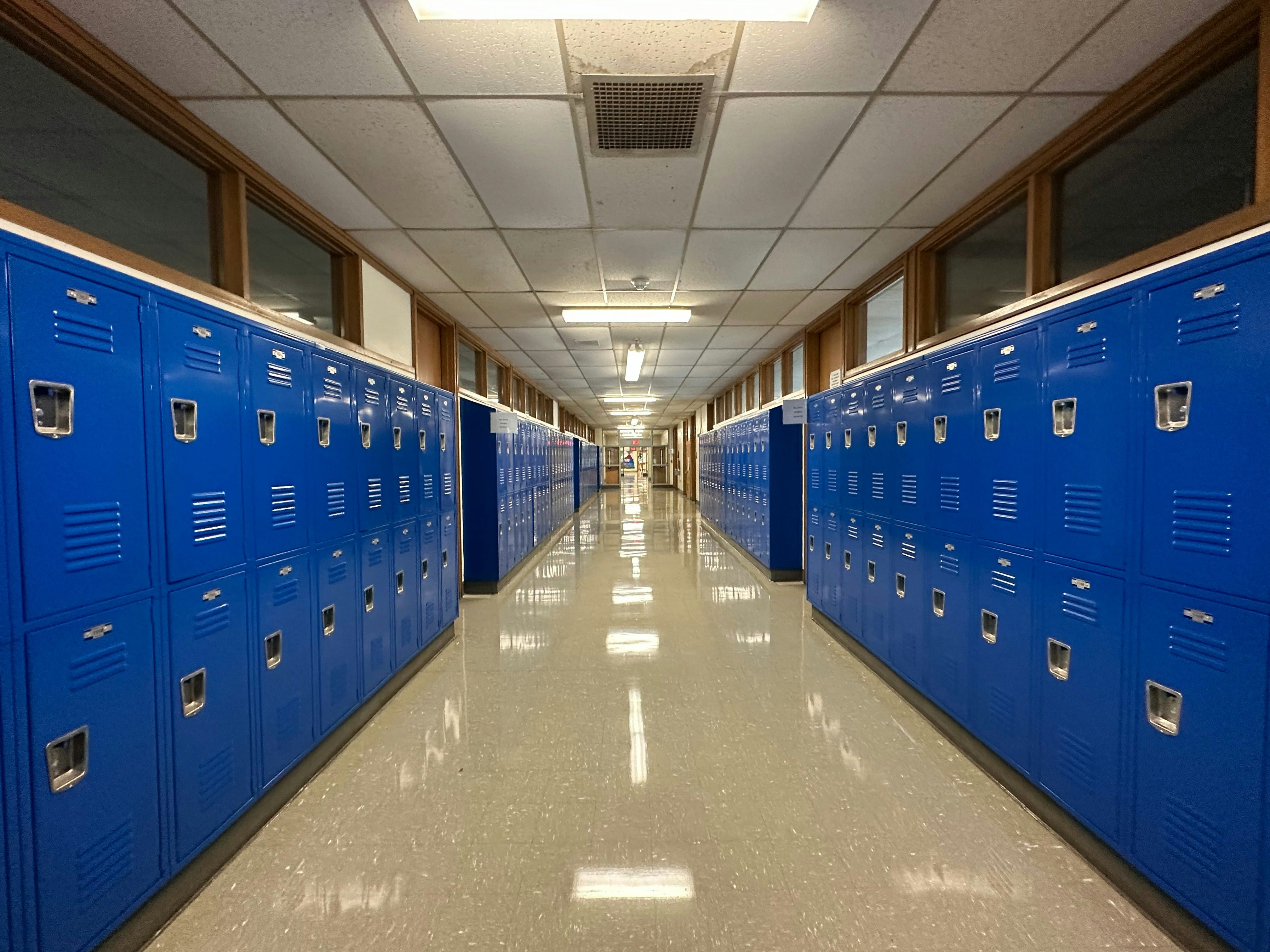
Photo by Christopher Ryan on Unsplash
School is where this lesson takes root.
Despite real improvements since I was a child, public school is still largely a compliance engine, a conformity factory designed to prepare kids for the “real world.” Sit still. Transition on command. Keep up with the pace, whether your brain is done or not. There are more supports now, helpful language, better intentions. I see that clearly in my daughter’s experience compared to mine. But the underlying architecture remains the same: time is fixed, output is rewarded, and deviation is managed.
This is especially punishing for low-visibility disability.
When a disability isn’t obvious, it becomes negotiable. Needs are easier to overlook, ignore, or debate. And if you’re bright, verbal, and capable of self-advocacy, you’re expected to explain yourself. To justify your needs. To prove they’re legitimate.
Advocacy stops being a right and becomes a test.
The paradox is brutal: the more capable you appear, the less credible your needs become. If you push, you’re difficult. If you don’t, you’re fine. If you can articulate what you need, you’re told you don’t really need it. And when you finally stop asking, the absence of visible struggle is taken as proof that the system works.
So, you learn to calibrate constantly. How much need can I show before it backfires? How much clarity can I ask for before I’m labeled rigid? How much accommodation is worth the social cost?
For many of us, the answer becomes adaptation through silence.
That’s where burnout is born.
And in today’s working world, it’s often kept alive by the expectation of constant, rapid pivots. Priorities shift without warning. Decisions are made quickly, reversed quickly, and rarely explained. People are expected to absorb change at speed, with no time to integrate it.
For some nervous systems, this is uncomfortable but manageable. For others, especially autistic and trauma-shaped ones, it’s profoundly destabilizing. The problem isn’t change itself. It’s change without containment.
Quick pivots don’t have to mean chaos. They don’t have to mean zero context, zero processing time, and zero recovery. When constant reprioritization is treated as a test of competence or commitment, it quietly rewards the people least harmed by it and exhausts everyone else.
That exhaustion isn’t passive.
It isn’t born from doing too little, but from doing too much invisibly. From constantly compensating for environments and relationships that work just fine for the people who refuse to change them. From running parallel processes all the time: managing the work, managing the ambiguity, managing other people’s expectations, managing the risk of being seen as a problem.
When this starts in childhood and continues uninterrupted into adulthood, burnout isn’t a surprise. It’s the predictable outcome of decades of externally reinforced self-abandonment. Of confusing endurance with strength. Of being rewarded for pushing past limits instead of protected from exceeding them.
Burnout isn’t a personal failure. It’s a systems failure with a long fuse.
And by the time it detonates, people are often shocked. You seemed fine.
I was. Until the cost finally came due.
If burnout is a systems failure, then the solution isn’t tougher people. It’s better environments. And it requires more people recognizing that what works just fine for them is not neutral for everyone else.
The irony is that the environments people like me need are not indulgent or inefficient. They’re clearer. Slower where it counts. More explicit about expectations. More forgiving of different processing speeds. Less obsessed with ambiguity as a proxy for intelligence or professionalism.
An environment that works for neurodivergent nervous systems doesn’t lower the bar. It removes unnecessary friction.
Clear instructions don’t reduce rigor. They reduce waste. Predictable timelines don’t kill creativity. They make room for it. Built-in processing time doesn’t slow progress. It prevents rework, errors, and exhaustion.
And none of this should require individual heroics.
It shouldn’t require people to constantly self-advocate, disclose diagnoses, or perform vulnerability on demand. The burden belongs in the design of the system itself. Needs don’t have to be justified if they’re already anticipated.
This is what we rarely name: flexibility shouldn’t depend on how well someone can explain themselves. Accessibility shouldn’t require proof of suffering. And accommodation shouldn’t be something you earn by breaking down badly enough.
In healthier environments, clarity is normal. Pacing is adjustable. Ambiguity is a choice, not a test. People are allowed to ask questions without being labeled difficult. They’re allowed to think before responding. They’re allowed to do good work without running themselves into the ground to prove they belong.
I know this is possible because I’ve worked in environments like this. More than once. Often without realizing I was selecting for them, simply by listening to my nervous system when choosing where to work.
That kind of world wouldn’t eliminate difference.
It would make difference survivable.
And for many of us, survivable would have been life-changing.
“That’s just not how the world works” isn’t a fact.
It’s a design decision.
And design decisions can be changed.