

Content note:
This piece references ABA. This topic is activating for many autistic people, and I’m naming that upfront.
Author note:
I’m not making a universal claim for or against any approach. I support individual choice and recognize that people’s needs, contexts, and experiences vary widely. I draw a hard line at coercion, loss of agency, or frameworks that treat neurodivergent people as problems to be fixed rather than humans to be supported. I’m naming my stance here so the body of this piece can stay focused on observation, not argument.
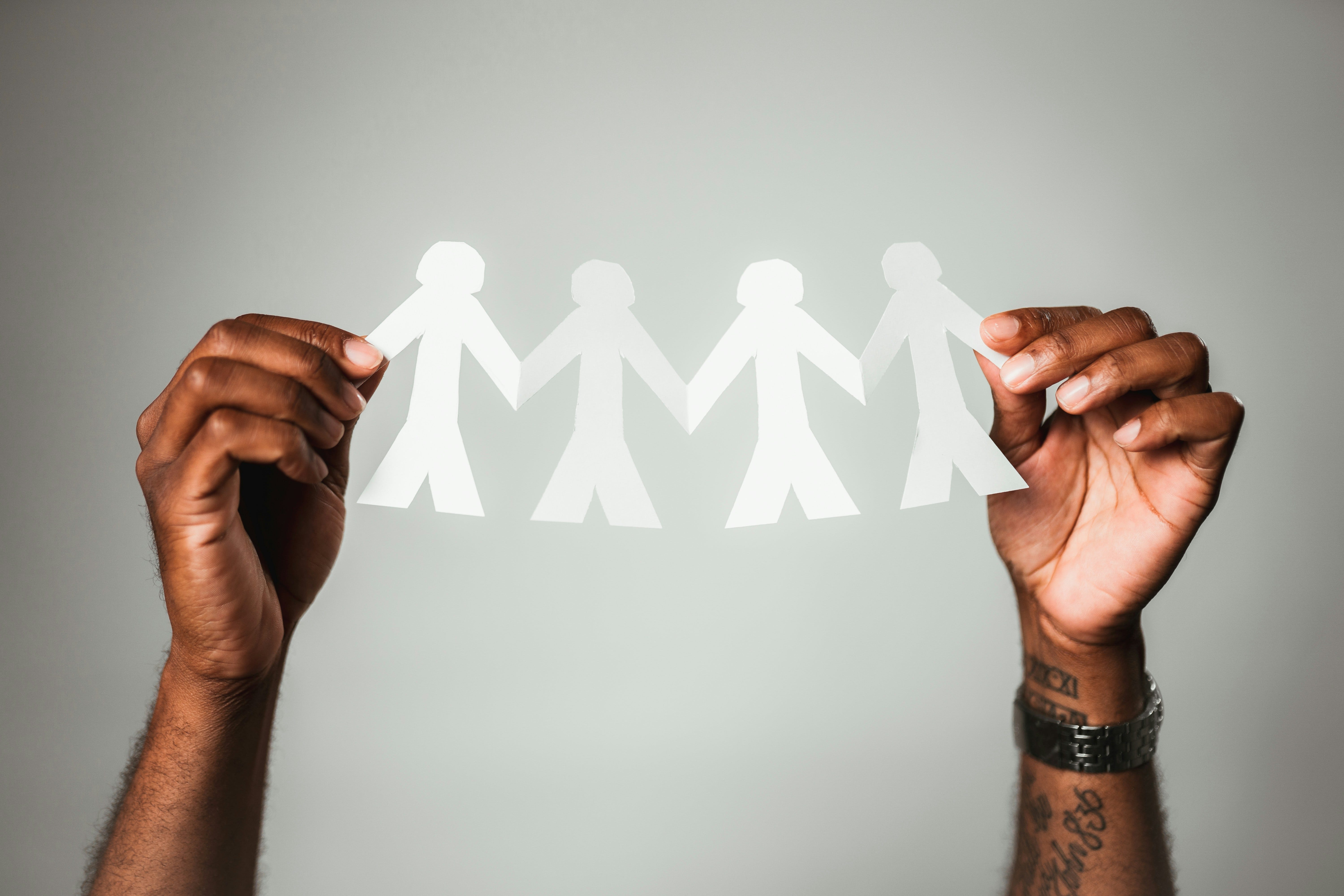
Photo by Andrew Moca on Unsplash
I’ve been noticing a pattern that gives me a quiet, full-body nope.
And I’m not alone in this. Many of us are noticing it.
As neurodivergence has become more visible, a version of it has also become more marketable.
Buzzwords.
Optimized traits.
Aesthetic language.
Quick fixes.
Relatable ideas with the sharp edges gently filed down.
I understand how this happens. When something complex finally gets named, it has to be translated in order to travel. And translation always simplifies. That part doesn’t feel malicious. It just feels like how things work.
The hard parts are there. The strengths are there too. But we’re not very good, as a culture, at holding both at the same time. There are many thoughtful writers and perspectives that dig into why this is. What I keep noticing is the more likely outcome: some people see only the difficulties or only the strengths, flatten the range of experience, and turn neurodivergent people into a monolith. From there, it’s a short step to villainizing, pathologizing, or romanticizing us, depending on which slice gets picked.
What unsettles me most is how this turns us into a caricature of ourselves. A detached animation. An advertisement. Something consumable instead of someone human. Once that happens, it becomes easier to talk about us without us. The context drops away. The contradictions disappear. The inner life gets lost. Humanity doesn’t vanish all at once. It gets edited out.
I noticed this most clearly after I named my autism on LinkedIn. Where my feed had previously been filled with neurodivergent, affirming, first-person voices, it rerouted almost immediately toward professionalized content about treatment. That framing is a hard no for me. Not because I think anyone means harm, but because of what the language gives away. A person had become a category, and categories attract intervention and marketing.
My reaction isn’t abstract. Years ago, I chose not to continue ABA for my daughter, not because I believed there was one right answer for everyone, but because I couldn’t live inside the framing. I don’t have lived experience with autistic people who have complex support needs, and I’m careful about the limits of my authority. I’ve read many first-person accounts, both for and against ABA, and the record is mixed, as lived experience usually is. It also seems clear that how this looks in practice varies widely, shaped as much by the individual practitioner as by any formal model.
There’s also a systems layer underneath all of this that’s hard to ignore. The structures around ABA are slow to change, in part because they’re baked into how funding, training, and services actually work. As a result, ABA often remains the default referral offered to families after a diagnosis. I personally support abolition only if there is real, accessible structure in place to replace it. Anything else leaves families without support at a moment when they’re already overwhelmed. Writing by Bridgette Hamstead helped me articulate that tension more clearly, and gave language to something I’d been circling for a long time.
My line has always been about agency, language, and whose comfort is prioritized.
That decision, rooted in my own family’s experience, sits alongside a larger pattern. What I’m describing isn’t limited to one household or one moment. It shows up in how neurodivergence is talked about, shared, and translated in public spaces.
Much of what I see shared is sincere. People reaching for language and recognition in a culture that doesn’t offer many places to land. Advocacy and awareness matter. So does the reality that most of us are using the tools available to us, even when they’re imperfect.
I also notice how repetition changes how things land. When people encounter the same messages often enough, especially when those messages don’t directly intersect with their own lives, they tend to tune out. Not out of cruelty or disinterest, but because familiarity dulls impact. It seems like another quiet barrier to the kind of public understanding advocacy hopes to create.
I’ve accepted that this is the landscape we’re in, and I trust the people who are best suited for direct advocacy to push things forward.
And still, something sits off in my gut.
I don’t think people do this on purpose. I think the culture we live in runs on autopilot more often than we realize. Meaning gets picked up and repackaged before we’ve had time to sit with it.
My body notices before my brain finishes the thought.
Because I know what neurodivergence feels like when it isn’t tidy or inspiring. When it’s just a nervous system moving through environments that weren’t built with it in mind. When there’s no clean arc or takeaway.
That’s why the pretense baked into modern culture gets under my skin. The smoothing. The polishing. The pressure to make everything legible, likable, and useful.
There’s an irony here, of course. I’m writing this on Substack, using a platform too. For now, it doesn’t carry quite the same advertising feel for me. What I’ve been reading here has felt slower, less optimized, and more human. I know some people use this space to build businesses, and I may someday as well. For now, it still feels like a place where complexity can linger without immediately being packaged. Yet.
This isn’t a rejection of visibility.
And it isn’t a demand that anyone do this “right.”
It’s just something many of us are still noticing.
When something starts to feel like an aesthetic, I slow down. When everything sounds empowering, I wonder what didn’t make it into the story. When things get too clean, I pay attention to the unease instead of brushing past it.
Some truths don’t travel well.
That doesn’t make them less true.
This post was seeded by longstanding thoughts and observations, alongside writing by Bridgette Hamstead that helped bring some of this into focus.
Thanks for tagging me! I'm glad I could help you find language for your thoughts.