
If You’ve Never Known Quiet
Autism, performance culture, and the cost of growing up online

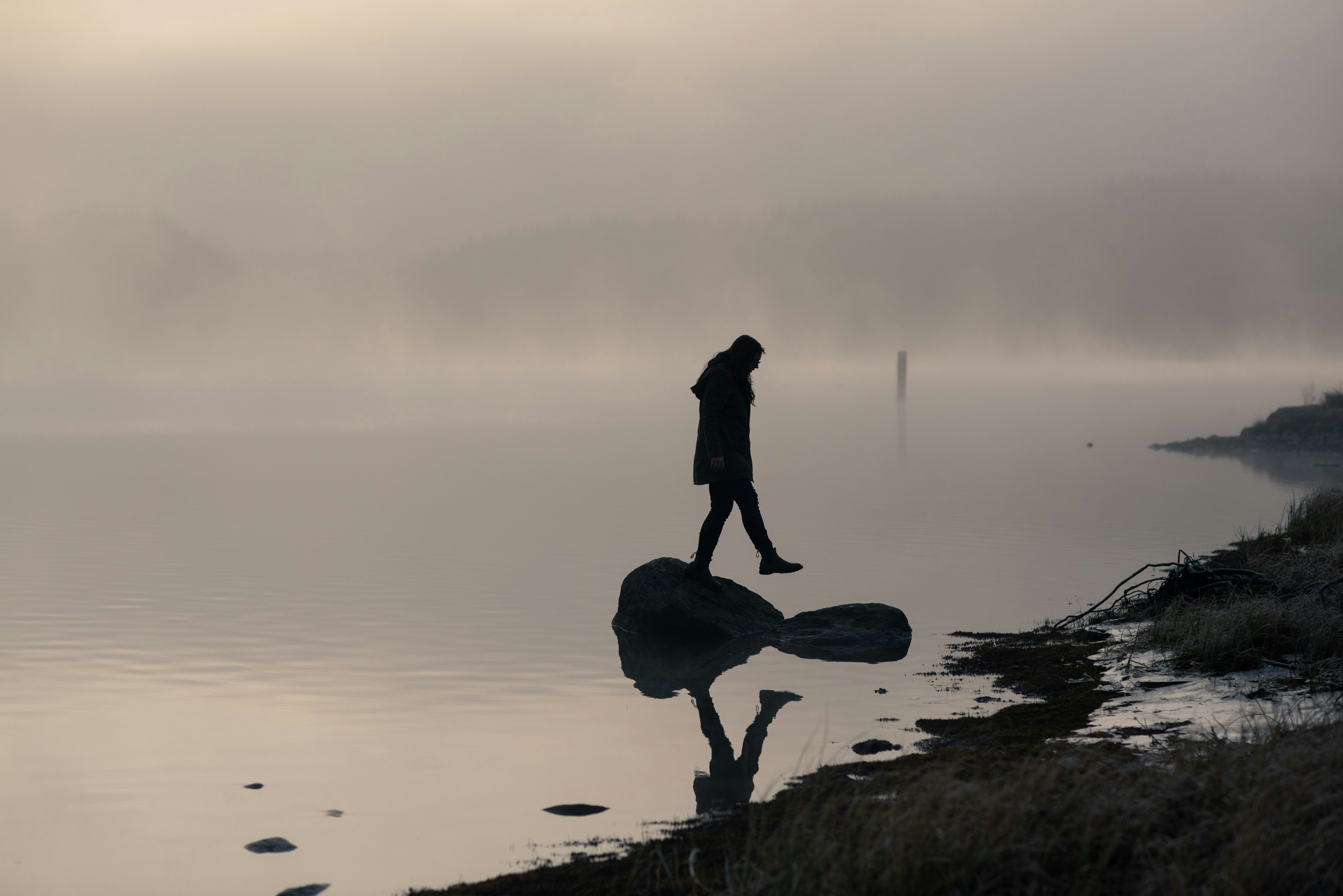
Photo by Tasha Marie on Unsplash
I sometimes think my nervous system was built for a quieter century.
Not because it was better or fairer, but because it was less performative.
The world now is not merely noisy. It is insistently present, even when you try to keep your distance. There is no clear edge, no reliable margin, no natural tapering off. Platforms are built to invite expression, reaction, optimization, and display by default. Opting out requires continuous effort. Even inner life is easily pulled into public space, pressed flat, and ranked. Once it enters public space, thought becomes content and feeling becomes signal.
Even authenticity has been absorbed into this logic. It’s named, branded, and optimized. There is a version of authenticity that checks optics first, signals vulnerability without risking unreadability, and performs well. What gets marketed as authenticity is often a curated approximation, shaped for reception. Actual authenticity, the kind that doesn’t preflight its impact or calibrate for audience, rarely survives intact in public space.
All of this lands somewhere in the body, whether we name it or not.
For an autistic nervous system, this undermines regulation. Constant ambient performance is layered over every interaction, whether you opt into it or not. Silence is tolerated briefly, but prolonged disengagement is read as absence, failure, or falling behind. Attention is treated as a commodity rather than a finite resource.
This is where it’s important to be precise about performance. Autistic people have long talked about performance in the context of masking, a learned behavior shaped by safety, access, and survival. Masking is not aesthetic. It is not optional. It is a response to lived consequences.
What’s striking now is that culture has become relentlessly performative, and so normalized that it’s barely perceived as such. Everyone is managing optics. Everyone is calibrating tone. Everyone is curating a version of themselves for public consumption. Autistic people participate in this broader cultural performance too, but we’re often villainized for masking, while the performative nature of the culture is treated as neutral, even natural. The water is so familiar that most people no longer recognize it as water.
What I’m really pointing at here is capitalism. It helps explain why this performance feels unavoidable. Marketing logic has bled into nearly everything. The performance I’m describing isn’t just social. It’s economic. And I’m not pretending to stand outside of it. Making a living is survival, too. Participation is not always a choice.
That’s why I’m hesitant to draw a bright line. The boundary between necessary visibility and corrosive performance isn’t clean, and it can’t be fixed in one place for everyone. I know where my own line sits, but I won’t offer it as a rule. I’m more interested in making the water visible, and letting each reader decide where they can, or can’t, afford to stand.
That perspective comes from memory.
Older autistic adults often name a vague sense of homesickness when we talk about this. Not nostalgia exactly. More like recognition. We remember a time when fewer things demanded interpretation. When identity wasn’t continuously declared. When competence didn’t require a public-facing version of yourself. When most interactions happened in rooms with a finite number of people, at human speed, without an audience.
That world was not kind. The patriarchy was heavier. Misogyny was blunt and structural. Racism, homophobia, and ableism were explicit, enforced, and often legally sanctioned. Many people were harmed, erased, or forced into silence.
The long arc since then has bent toward greater recognition, visibility, and formal rights, even if uneven and incomplete in practice. What once went unnamed is now more often named. What was once dismissed is more likely to be challenged. Progress is real.
And it would be dishonest to omit that some of that progress has frayed in recent years. Backlash is louder. Rights feel more conditional. The cultural temperature is hotter, not cooler. Gains that once felt settled now feel precarious. People are scared.
Still, this is not an argument for returning to the past. That option doesn’t exist. The world we are in is the world we have. But it’s worth being clear about the problem being posed. Constant psychological saturation is treated as a given, and individuals are then asked to adapt to it privately. This is framed as progress, when in fact it reflects a set of structural choices about pace, volume, and visibility.
Justice and nervous-system survivability should not be positioned as competing values. Social progress doesn’t require everyone to be constantly on or on display. If the only way forward demands chronic dysregulation from the people most sensitive to load, then the design itself deserves scrutiny.
This is also where the conversation becomes materially uncomfortable.
Living at a lower volume is rarely compatible with earning an income, especially when in-person work isn’t an option. The modern economy rewards visibility, responsiveness, and constant output. It favors people who can stay on display, convert themselves into something marketable, and move at algorithmic speed without burning out. Quiet work is harder to find. Deep work is slower to monetize. Rest has no dashboard.
I find myself envious of the small number of people who seem able to choose a slower, less performative life without financial consequence. I’d love to figure out how to have that kind of life myself: a way of meeting basic needs that doesn’t require constant visibility or online presence. What I can’t see are the mechanics. I don’t understand how that life is funded, protected, or made durable over time. For most of us, especially people whose nervous systems are more sensitive to environmental demands, including digital, social, and economic ones, reducing visibility can be both a preference and a gamble. It’s not a choice everyone can afford to make. And the cost of losing that gamble can be existential.
That tension matters, because it means this isn’t just a nervous system issue. It’s an economic one. We are asking people to self-regulate in ways the labor market actively punishes. Hiring no longer happens in quiet, bounded places. We praise balance while structurally rewarding depletion. Autistic people feel that contradiction in our bodies long before we have language for it.
And this is where my concern shifts, sharply, toward autistic youth.
Older autistic adults speak from comparison. We know what a lower volume feels like in the body. We have lived inside a different tempo, however flawed the surrounding culture was. We know that another rhythm is possible.
Autistic kids today do not have that reference point.
For many autistic kids, especially those with lower visible support needs, they are growing up inside a system that treats constant connection as baseline, even virtuous. They are expected to be visible early, fluent in performance, and resilient to feedback they did not ask for. Identity formation happens under permanent audience conditions. Silence is suspect. Withdrawal is pathologized. There is no baseline of quiet against which to measure distress.
When we say, “This is too much,” we are naming contrast. When they struggle, they are more likely to assume the problem is internal.
That is what worries me most.
The common response is to talk about restriction. Less screen time. Device-free zones. Intentional slowness. In theory, yes. In practice, these measures are uneven, fragile, and often unrealistic. Schools are digitized. Social lives are mediated. Safety, coordination, and belonging all route through technology. Opting out is rarely accepted and often costs autistic kids social ground they cannot afford to lose.
So instead, we ask them to self-regulate inside a system that never stops stimulating them.
We offer coping strategies rather than environmental critique. We medicalize their overwhelm while normalizing the conditions that produce it. We ask why they are anxious, withdrawn, or exhausted without asking what kind of nervous system could reliably thrive under these demands.
The deeper risk is not just burnout. It’s a misattribution of cause: distress gets blamed on the person instead of the conditions producing it. Constant performance is mistaken for identity. Visibility is mistaken for connection. The inability to rest feels like a personal failure rather than a predictable response.
If you have never known quiet, you do not miss it. You just assume the noise is coming from inside you.
So, when I step back. When I reduce visibility. When I choose depth over reach. It is not disengagement. It is regulation.
And increasingly, it is modeling for my kids: evidence that another tempo exists, and that wanting it does not mean wanting to go backward.
Seeded by a passing observation from Nick Dean 3.0
Thank you for writing this. Today my house is full of TikTok. Please say 'ask them to wear headphones'. I do, but they won't. They lose them, break them, run out of battery.
Unlike the people who appear on TikTok. The screamers.